
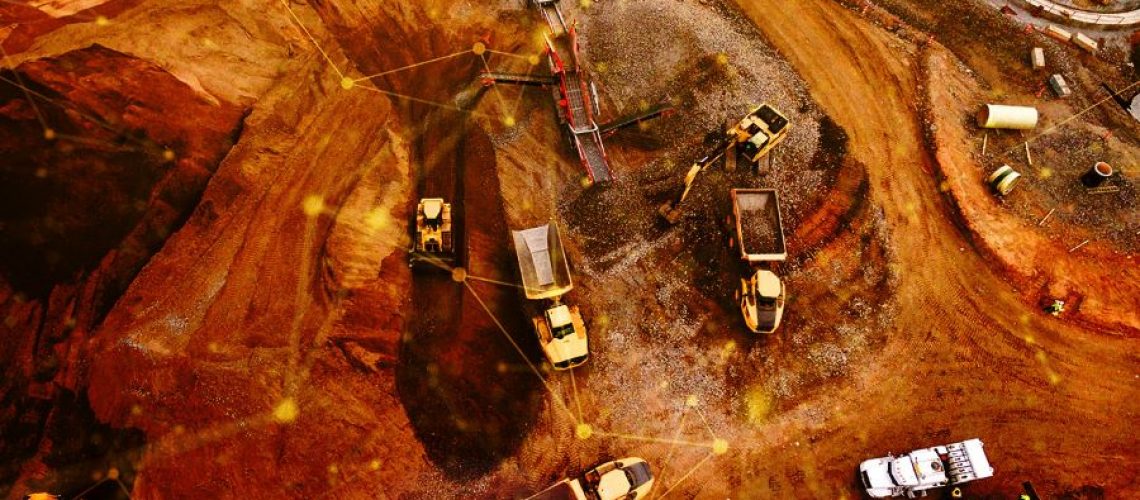
McKinsey predicts that by 2035 AI and IoT will save up to $390 billion for mining operations annually. Of course, revenue will grow accordingly. However, according to a study conducted with 100 global mining companies, only half utilise IoT’s opportunities for cost savings and the other half still suffer losses from these missed opportunities.
In a recent IoT Mining Webinar hosted by MTN Business, top minds in the industry were brought together to discuss the future of IoT in the South African mining industry. Insightful presentations and a robust panel discussion leads to the conclusion that IoT has a definite home in industry.
South Africa is seeing improvements in the digitsation of the mining sector as mines start gaining the benefits technology offers. Investment only in the Internet of Things (IoT) has grown more than 30% over the past six years, other technologies in the digital ecosystem powering smart mines seeing similar growth. Connectivity forming the bedrock of IoT, MTN has invested billions in infrastructure to ensure the best connectivity in South Africa. Valued at R83 million in 2022, IoT investments in mining are expected to reach more than half a billion Rand by 2028.
This growth in IoT in the mining sector is partly the result of the improved availability of reliable connectivity infrastructure, partly the result of the need for greater autonomy and smarter operations, and partly as a result of intensifying pressure within commodity markets. Mines are reporting cost optimisations of around 23% as a result of IoT solutions and 18% improved production recovery through reduced downtime of machinery and shutdowns, ensuring much greater investment into IoT solutions in the future as mines look to gain even more efficiencies.
Use cases
MTN is actively running multiple test cases with mines throughout South Africa, allowing for extensive testing of the technology in various applications. IoT investments are providing compelling use cases. From energy efficiency to waste and environmental monitoring, to equipment and asset monitoring, the implementation of IoT and its associated technologies is transforming mines into poster children for the Fourth Industrial Revolution (4IR).
Mining operations consume significant amounts of energy and resources. In fact, this industry accounts for 10% of total global energy consumption, so any inefficiency and stoppage have substantial costs.
To avoid this, service engineers are installing sensors on mining machinery, and monitoring operations in real-time as RFID tags, sensors, and labels generate data. All of this data transfers to the cloud for analysis, and the analysis provides insights into every stage of the mining process. Based on those insights, engineers can adjust their operations to reduce energy (and cost) wastage and prevent downtime and production delays.
Similarly, the industry has traditionally found it hard to predict system failures. This unpredictability makes it impossible to precisely determine ideal maintenance timeframes, directly leading to breakdowns, reduced asset uptime, and decreased productivity. These conditions have historically led to increased costs and reduced profitability.
IoT enables smart predictive maintenance. Sensor networks integrated into the mining equipment monitor every aspect of mining operations. They also monitor every critical asset parameter such as pressure, vibration, and temperature and trigger alerts before failures occur. Remote diagnostics also play an essential role in greater mine productivity. Detecting wear and tear of equipment helps project troubleshooting activities. For mining companies, this means more uptime and fewer financial losses.
There are many other IoT use cases that mines have started valuing. Radical improvements in safety are being matched with marked improvements in ESG adoption and reporting and value chain automation, to name a few. Whether miners have implemented large-scale projects or have just started investing in IoT, they are all starting to see the benefits of proactive, informed decision making.
The value of technology
Mining productivity in South Africa decreased by 7.6% over the past decade, and costs rose by 2%-3% in real terms. This indicates why technological interventions are proving so valuable.
Digitisation and IoT have proved themselves enablers of health and safety, mining throughput, operating cost, and efficiency. 25% of mining executives expect a greater than 30% improvement in health and safety performance over the next five years. Conservative estimates of throughput increase place it at between 10% and 20% due to 4IR technologies over the same time period. Mines are also expected to achieve targeted efficiency gains of at least 10% over the next five years.
When a mining business relies on smart technologies to connect people, equipment, and processes, it gets a transparent ecosystem that enables continuous and careful monitoring. This, in turn, allows mining companies to achieve operational and process improvements that guarantee an improved budget, optimised operations, and increased productivity. All this innovation, progress and technological advancement rests comfortably on the Best Network in South Africa.
